
The Ultimate Guide to the Steps to Washing Your Face
- Feb 10
- 14 min read
Perfecting the steps to washing face is arguably the most critical part of any skincare routine. When you master this daily habit, it does more than just clean your skin. It removes impurities, prevents breakouts, and prepares your face to effectively absorb serums and moisturizers. It is the true foundation for healthy, glowing skin.
What You Need to Know: A Quick Overview
It sounds almost too simple, right? Just wash your face. But how you do it truly sets the stage for everything else. Small, common mistakes can quickly lead to irritation, frustrating dryness, or even more breakouts.
At Mid-County Dermatology, our board-certified St. Louis dermatologists, Dr. Feigenbaum and Dr. Gibstine, see patients from all over, from Clayton to Chesterfield, who help clear their skin just by refining their cleansing technique. This guide breaks down the dermatologist-approved way to wash your face, step by step. We'll go beyond the basics to explain the why behind each action—from the right water temperature to how you pat your face dry.
A proper cleanse isn't just about removing dirt; it's about supporting your skin's delicate balance. Think of it as the cornerstone of your entire skincare ritual.
Protecting Your Natural Skin Barrier
Your skin has its own built-in protective barrier that's responsible for locking in moisture and keeping irritants out. When you're too harsh with cleansing, you can strip this barrier, which opens the door to a whole host of problems. According to research published in the Journal of the American Academy of Dermatology, a compromised skin barrier is linked to conditions like eczema and increased sensitivity (AAD, 2018).
Over-washing: It's a common trap. Washing too often can strip away your skin's natural oils. This sends a panic signal to your skin to produce even more oil, which can ironically lead to more breakouts.
Wrong Products: Using a bar of body soap or a cleanser that’s too aggressive for your face can throw off your skin's pH and do real damage to that protective layer.
Barrier Health: A happy, healthy barrier is the secret to calm, hydrated skin. It’s a fascinating topic, and you can learn more about it by exploring the skin microbiome and its impact on skin health.
"The goal of cleansing isn't to get that 'squeaky clean' feeling," notes Dr. Feigenbaum, one of our trusted St. Louis skin specialists at Mid-County Dermatology. "That tightness is often a sign that you've stripped your skin's essential lipids, leaving it vulnerable."
While most of us know washing our face is important, the actual techniques and products people use are all over the map. Surveys show that while about 72% of consumers use a facial cleanser every day, many are still making critical mistakes. It really highlights the need for clear, expert guidance.
The Definitive Facial Cleansing Routine
A truly effective face-washing routine is more than just a quick splash of water and soap. It's a thoughtful ritual, and the specific actions you take can make a huge difference in your skin's health. Here, our St. Louis skin specialists break down the definitive steps to washing your face for clean, healthy skin.
1. Start with Clean Hands and Lukewarm Water
First things first: wash your hands. Before you even think about touching your face, give your hands a thorough wash with soap and water. They pick up bacteria and dirt all day, and you definitely don't want to transfer that grime onto your delicate facial skin. It’s a simple, often-overlooked step that prevents spreading germs that can lead to breakouts.
Now, let's talk water temperature. There's a common myth that hot water opens pores and cold water closes them. That's not how it works. In reality, extreme temperatures just cause irritation.
Hot Water: This is a big no. It strips your skin of its natural, protective oils. This can lead to dryness, irritation, and even make your skin more oily as it tries to overcompensate.
Cold Water: It’s less effective at dissolving cleanser and breaking down grime, which can leave behind residue that clogs pores.
Lukewarm Water: This is your sweet spot. It’s gentle enough to avoid stripping your skin's barrier but warm enough to help your cleanser do its job properly.
2. Apply Cleanser with Gentle, Circular Motions
Squeeze a small, dime-sized amount of your cleanser onto your fingertips. Instead of scrubbing aggressively, apply it to damp skin using gentle, upward circular motions. This technique does more than just clean—it also helps stimulate circulation, which contributes to a healthier glow.
Make sure you're massaging the cleanser into your skin for at least 30 seconds. This is key. A lot of people rush this part, but giving the product enough time allows its active ingredients to actually work their magic, breaking down oil, makeup, and impurities. This is especially important if you're dealing with congestion.
If you struggle with clogged pores, our detailed guide on how to get rid of blackheads and pores offers more targeted strategies.
This infographic shows just how easily small mistakes in your routine can lead to irritation, while the right steps set the foundation for healthy, glowing skin.
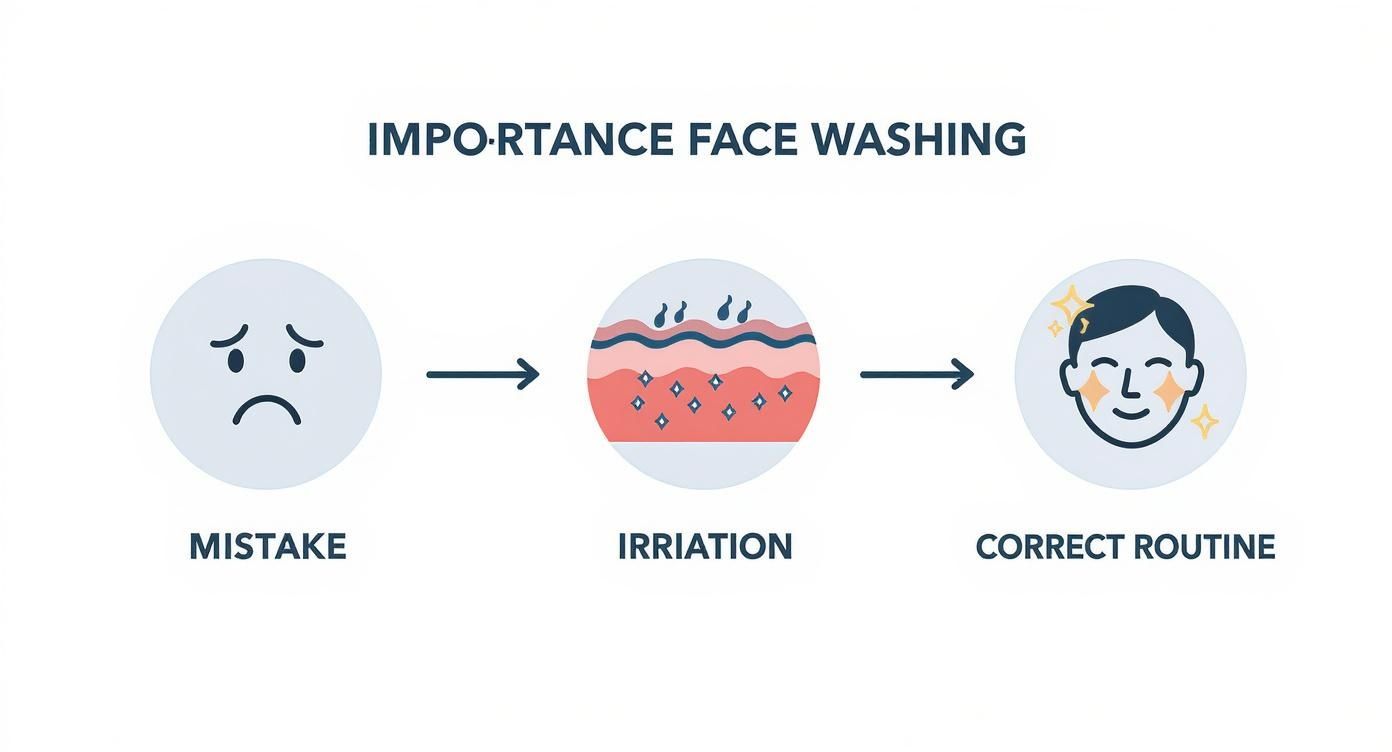
The takeaway here is that improper techniques can directly cause skin distress. A mindful, gentle approach is what truly builds radiance.
3. Rinse Thoroughly and Pat Dry Carefully
Once you've cleansed for a full minute, it’s time to rinse, and this step is just as crucial as washing. Splash lukewarm water on your face repeatedly until every last trace of cleanser is gone. Pay special attention to your hairline, jawline, and the sides of your nose—these are notorious spots for leftover residue that leads to breakouts.
"Many of the skin issues we see in patients from Frontenac and Creve Coeur stem from cleanser residue," notes Dr. Gibstine of Mid-County Dermatology. "A thorough rinse is non-negotiable for preventing clogged pores and maintaining a clear complexion."
After rinsing, gently pat your face dry with a clean, soft towel. Rubbing your face is too abrasive and can create micro-tears in the skin, leading to inflammation over time. It’s also vital to use a fresh towel regularly, since damp towels are a breeding ground for bacteria. This final, gentle step preserves your skin's integrity and gets it ready for whatever comes next in your routine.
For more insight into building the first cleanse of your day, explore a dedicated morning face wash routine.
Finding the Right Cleanser for Your Skin
Perfecting your face-washing technique is a huge step, but what happens when you’re using the wrong cleanser? It’s a bit like trying to build a house on a shaky foundation—it just won't work. Your skin is unique, and the product you use every day should respect that. Here at Mid-County Dermatology, our team of St. Louis skin specialists constantly helps patients understand that what works wonders for a friend might be a disaster for them.
So, how do you choose? It all starts with getting honest about your skin type. Whether your skin is oily, dry, sensitive, or somewhere in between, there's a specific formula out there designed just for its needs. This isn’t just a trend; it's becoming a non-negotiable for savvy consumers. In fact, a recent study projects the global market for facial cleansers will hit $14.9 billion by 2025, largely because people are finally learning to match products to their specific concerns. You can dive deeper into this trend by reading the full research on the face cleanser market.

Matching Cleanser to Your Skin Type
Walking down the skincare aisle can feel overwhelming. Let’s break down which cleanser types are best for different skin needs, helping everyone from Ladue to Frontenac find their perfect match.
For Oily or Acne-Prone Skin: Gel or foaming cleansers are going to be your best friends. These formulas are brilliant at cutting through that excess sebum (oil) and clearing out pores without stripping your skin bare. Look for active ingredients like salicylic acid, which exfoliates deep inside the pore, or benzoyl peroxide to combat acne-causing bacteria. For a deeper dive, check out our guide on how to manage oily skin.
For Dry or Mature Skin: You'll want to lean into cream, lotion, or even oil-based cleansers. These provide a much-needed dose of hydration while they work, gently lifting away impurities without disrupting the skin's natural moisture barrier. Scan the ingredients list for heroes like hyaluronic acid, glycerin, and ceramides—all of which help your skin hold onto precious moisture.
For Sensitive Skin: Stick with micellar water or cream cleansers that have a minimal, soothing ingredient list. It’s absolutely crucial to steer clear of potential irritants like fragrances, alcohol, and harsh sulfates (like sodium lauryl sulfate). Instead, look for calming ingredients like niacinamide, aloe vera, and chamomile to help soothe redness and inflammation.
Decoding Cleanser Formulations
The texture of a cleanser—whether it's a silky oil or a satisfying foam—tells you a lot about how it will feel and function on your skin. Getting familiar with these differences makes it easier to pick something you'll actually enjoy using day in and day out.
"A common mistake we see is patients in Creve Coeur and Clayton using a harsh, stripping cleanser for oily skin, which only makes the problem worse," explains Dr. Feigenbaum, a trusted St. Louis Dermatologist. "The goal is balance, not aggression. Your skin should feel clean and comfortable, never tight or dry after washing."
To make it even simpler, here's a quick guide to some of the most popular cleanser types you'll find on the shelf.
Cleanser Guide for Every Skin Type
This table breaks down the common cleanser types, what to look for on the label, and who they’re best for.
Cleanser Type | Key Ingredients | Best For Skin Type | Texture/Feel |
|---|---|---|---|
Gel Cleanser | Salicylic Acid, Glycolic Acid | Oily, Combination, Acne-Prone | Lightweight, clear, and lathers well. |
Cream Cleanser | Hyaluronic Acid, Ceramides, Glycerin | Dry, Sensitive, Mature | Rich, milky, and non-lathering. |
Foam Cleanser | Niacinamide, Antioxidants | Normal, Combination, Oily | Starts as a liquid or cream, turns into a light, airy foam. |
Oil Cleanser | Jojoba Oil, Squalane, Vitamin E | All skin types, especially for makeup removal. | Silky oil that emulsifies with water. |
Ultimately, finding "the one" might take a little trial and error. The most important thing is to listen to your skin. Pay attention to how it feels right after you wash your face and in the hours that follow. The right product will leave you feeling refreshed and balanced, creating the perfect canvas for the rest of your skincare.
Common Cleansing Mistakes You Might Be Making
Even with the best intentions, it's easy to make small missteps in your daily routine that can undermine your skin's health. At Mid-County Dermatology, Dr. Feigenbaum and Dr. Gibstine often find that correcting just a few common errors can make a world of difference for our patients.
We see these same cleansing mistakes pop up all over the St. Louis area, and the fixes are usually pretty simple. Let's walk through them.

Chasing That 'Squeaky Clean' Feeling
So many of us were taught that skin should feel tight and almost 'squeaky' after washing. The truth is, that feeling is a major red flag. It’s a sign that you’ve stripped away your skin's natural, protective oils and compromised its barrier function.
A healthy skin barrier is your first line of defense—it’s what locks in moisture and keeps irritants out. Damage it, and your skin can become dehydrated, inflamed, and even overproduce oil to compensate, leading to a frustrating cycle of dryness and breakouts. Your face should feel soft and comfortable after cleansing, never taut.
Using Water That's Too Hot
The old myth that hot water "opens up" your pores is one we hear all the time, but it’s just not true. Pores don't have little muscles to open and close like that. All hot water really does is strip your skin of its essential lipids, which leads to redness, irritation, and dryness.
This is a particularly common issue we see in patients from Chesterfield to Ladue, especially during the colder months. Always aim for lukewarm water. It’s more than effective enough to dissolve cleanser and grime without being harsh on your skin.
"A simple switch from hot to lukewarm water can dramatically reduce skin irritation and sensitivity," advises Dr. Gibstine, a leading St. Louis skin specialist. "It's one of the easiest and most impactful changes you can make to your routine."
Over-Washing or Over-Exfoliating
When it comes to cleansing, more is not always better. Washing your face more than twice a day (unless you've been sweating heavily) can be totally counterproductive.
The same goes for exfoliation. Using abrasive physical scrubs or harsh chemical exfoliants too often can cause micro-tears in the skin and lead to chronic inflammation. Stick to a gentle cleanse twice daily and limit exfoliation to just a few times per week, depending on what your skin can handle. Finding this balance is a key part of the steps to washing face correctly.
Face Washing Myth vs Fact
Common Myth | Dermatologist's Fact |
|---|---|
You need to scrub hard to get clean. | |
Acne is caused by a dirty face. | Acne is a complex condition caused by oil, dead skin cells, bacteria, and hormones—not just surface dirt. Over-washing can actually make it worse. |
Expensive cleansers are always better. | The price tag doesn't determine effectiveness. A simple, gentle, and affordable cleanser that suits your skin type is often the best choice. |
Pores can open and close. | Pores are just openings for hair follicles and oil glands; they don't have muscles. Steam can help loosen debris within them, but they don't "open." |
Debunking these myths helps you build a routine based on what your skin actually needs, not on outdated advice. The goal is always to work with your skin, not against it.
How Often You Should Actually Wash Your Face
That old “wash twice a day” advice? It’s a solid starting point, but it's certainly not a one-size-fits-all rule for skincare. The best frequency for washing your face really comes down to your unique skin, your lifestyle, and even the unpredictable St. Louis weather. Nailing this part of your routine is just as important as the products you use.
Someone with oily, acne-prone skin trying to survive a humid St. Louis summer will almost certainly benefit from cleansing twice a day. It helps manage that excess oil and keeps pores from getting clogged. On the other hand, someone with very dry or sensitive skin might find that a morning and night routine is just too much, leaving their skin feeling stripped and irritated.
Finding the Right Frequency for Your Skin
So, where’s your sweet spot? The best way to find it is to simply listen to your skin. If your face feels tight, looks red, or gets irritated after washing, you’re probably overdoing it. But if you’re noticing more breakouts than usual or your skin just looks dull and congested, you might need to wash a bit more consistently.
Here’s a practical guide to help you figure it out:
Twice a day is probably best if: You have oily or combination skin, you wear makeup most days, or you live in a city environment. A morning wash gets rid of the oil that builds up overnight, while your evening cleanse is crucial for removing the day's grime.
Once a day (at night) might be better if: You have very dry or sensitive skin that doesn't feel greasy in the morning. A single, effective evening cleanse is still non-negotiable to remove sunscreen, dirt, and pollutants.
Always wash after a workout: This is the one rule that applies to everyone. When sweat mixes with the oil and bacteria on your skin, it’s a perfect recipe for clogged pores and breakouts.
It’s interesting to see how cleansing habits differ around the world. While over 85% of consumers in the Asia-Pacific region cleanse both morning and evening, that number is closer to 50% in North America. Globally, the average is about 1.5 times per day. Discover more insights about global face-cleansing habits.
"There is no one-size-fits-all answer," explains Dr. Feigenbaum from Mid-County Dermatology. "A patient in Ladue with rosacea will have very different cleansing needs than a teenager in Chesterfield dealing with hormonal acne. The key is to find a routine that leaves your skin feeling clean but also calm and balanced."
At the end of the day, the goal is to support your skin’s natural barrier, not strip it away. If you're still not sure what’s right for your specific concerns, talking to a St. Louis skin doctor can provide some much-needed clarity.
When to See a St. Louis Dermatologist
A thoughtful, consistent cleansing routine is the absolute foundation of healthy skin, but it isn't a cure-all. While getting the steps to washing your face right can manage minor issues, some conditions simply require professional care from a board-certified St. Louis dermatologist.
Knowing when to stop guessing and seek expert help is crucial. Trying to self-diagnose skin issues often leads to a cycle of frustration, wasted money on products that don't work, and a delay in getting effective treatment. If you're on the fence, it helps to know the key signs that indicate it's time to consult an expert.
Signs It's Time for a Consultation
Over-the-counter products are fantastic for many people, but they have their limits. If you've been consistent with your skincare routine and those persistent issues just aren't budging, that’s a clear signal to book an appointment.
You should definitely consider scheduling a visit with a St. Louis skin doctor here at Mid-County Dermatology if you're dealing with:
Persistent Acne: Breakouts that don't improve with standard cleansers or treatments are a major sign. This is especially true for deep, painful cystic acne that can lead to scarring.
Severe or Rosacea: Flare-ups causing significant redness, serious discomfort, or inflammation that you just can't get under control at home need a professional eye.
New or Changing Moles: Any spot that changes in size, shape, or color requires immediate professional evaluation to rule out skin cancer.
Unexplained Rashes or Dry Patches: Skin issues that pop up and linger for weeks without a clear cause warrant a diagnosis.
"Many patients from Clayton and Ladue try to manage serious skin conditions at home for too long," notes Dr. Feigenbaum. "A professional evaluation provides an accurate diagnosis and a personalized treatment plan that can save you time, money, and frustration."
Here at Mid-County Dermatology, Dr. Gibstine and our entire team of St. Louis skin specialists are ready to provide the expert care you deserve. For a deeper look into this topic, check out our guide on the 6 signs you should see a dermatologist.
Key Takeaways
Gentle is Key: Always use lukewarm water, gentle circular motions, and pat your face dry. Avoid harsh scrubbing and hot water.
Match Your Cleanser: Choose a cleanser designed for your specific skin type—gel for oily, cream for dry, and gentle formulas for sensitive skin.
Consistency Matters: Wash your face once or twice daily, and always after a workout, to keep your skin balanced and clear.
Know When to Get Help: If over-the-counter products aren't solving persistent issues like acne, rosacea, or eczema, consult a board-certified dermatologist.
FAQ Section: Your Top Face Washing Questions
Perfecting your face-washing technique always brings up a few questions. To help you fine-tune your routine, our St. Louis dermatology experts at Mid-County Dermatology are tackling the most common queries we hear from patients every day.
Is hot or cold water better for face washing?
Neither extreme is a friend to your skin. Super hot water is harsh and strips away the natural, protective oils your skin needs, which can lead to dryness and irritation. Cold water doesn't do a great job of breaking down cleanser and grime, risking residue that can lead to clogged pores. The best practice is to always stick with lukewarm water—it's the perfect sweet spot.
Do I really need to wash my face in the morning?
For most people, a quick, gentle morning cleanse is a fantastic idea. While you sleep, your skin produces oil and sheds dead cells. A simple wash clears that away, creating a clean slate for daytime products like sunscreen. However, if your skin is extremely dry or sensitive, a simple splash of lukewarm water may be all you need. If you're unsure, a St. Louis skin specialist can help you figure out what's best for your unique skin.
Are makeup wipes a good substitute for cleansing?
Think of makeup wipes as an emergency-only tool—great for the gym or while traveling, but never a replacement for a real wash. The problem is that wipes tend to just smear makeup, oil, and dirt across your face instead of actually removing them. A wipe just moves the mess around; a proper cleanse with a dedicated product and water actually washes it all away for good.
How can I tell if my cleanser is too harsh?
Your skin will tell you, and usually right away. If your face feels tight, dry, itchy, or looks red and flaky immediately after washing, your cleanser is probably too aggressive and is stripping your skin's protective barrier. The goal is skin that feels clean, soft, and comfortable—not "squeaky clean." That squeaky feeling is actually a sign of distress.
Ready to build a skincare routine that truly works for you? The expert team at Mid-County Dermatology is here to provide personalized advice and treatment plans. Schedule your consultation today!
This information is for educational purposes only and does not constitute medical advice. Please consult with Dr. Feigenbaum, Dr. Gibstine, or another qualified healthcare provider at Mid-County Dermatology for personalized treatment recommendations. Individual results may vary.


Comments