
How to Reduce the Appearance of Scars: A St. Louis Dermatologist's Guide
- Apr 13
- 10 min read
Whether from a recent surgery, an old injury, or a tough bout with acne, a scar can be a frustrating daily reminder. But here's what the board-certified dermatologists at Mid-County Dermatology want you to know: a scar is your body's natural way of healing, and its appearance is not something you just have to live with.
With the right, evidence-based game plan—one combining consistent at-home care with expert guidance from a St. Louis skin specialist—you can significantly fade almost any scar and feel more confident in your own skin.
What You Need to Know: A Quick Overview
Navigating scar treatments can feel overwhelming. To simplify, we've broken down the key approaches we'll cover in this guide, from initial wound care to advanced procedures available right here in St. Louis.
Treatment Category | Primary Goal | Common Examples |
|---|---|---|
Immediate Wound Care | To prevent excessive scarring from forming in the first place. | Proper cleaning, maintaining moisture, and sun protection. |
At-Home Treatments | To improve the color, texture, and height of existing mild scars. | Silicone sheets, specialized creams, and consistent sunblock. |
Professional Procedures | To address stubborn, deep, or complex scars with advanced technology. | Laser therapy, microneedling, and steroid injections. |
This table gives you a bird's-eye view of the path ahead. Whether you're dealing with a fresh mark or one that's been around for years, there's a solution that can help.
Dr. Feigenbaum and Dr. Gibstine, our board-certified St. Louis dermatologists, always stress that a personalized plan is essential. A treatment that works wonders for a patient in Chesterfield might not be the best fit for someone in Frontenac. As a trusted St. Louis skin doctor, our mission is to create a clear, effective strategy tailored specifically to you and your skin.
Minimizing Scars from Day One: Proper Wound Care
The journey to a less noticeable scar starts the moment your skin is injured. One of the biggest myths we hear from patients across St. Louis is the old advice to "let a wound air out." In reality, decades of research, including studies published in the Journal of the American Academy of Dermatology, have shown the opposite is true for optimal healing.
Proper wound care is your first line of defense. To give your skin the best chance and keep scarring to a minimum, you must implement strategies to reduce inflammation right away. This initial care truly sets the stage for how your skin rebuilds itself.
Your Initial Wound Care Checklist
Gentle, consistent care in those first few days can make a world of difference. The goal is simple: create a clean, moist, and protected environment. This helps your skin cells repair the damage efficiently without going into overdrive, which leads to the thick, excessive collagen buildup seen in prominent scars.
Here’s the practical, evidence-based checklist our St. Louis dermatology experts provide to patients from Ladue to Creve Coeur:
Keep It Clean: Gently wash the area daily with mild soap and water. Skip harsh scrubbing and avoid hydrogen peroxide after the initial cleaning, as it can damage delicate, healing skin tissue.
Keep It Moist: This is a crucial step. After cleaning, apply a thin layer of petroleum jelly. This prevents the wound from drying out and forming a hard scab, which can impede new skin cell growth.
Keep It Covered: Place a sterile, non-stick bandage over the wound. This shield protects the area from bacteria, prevents friction from clothing, and locks in moisture. Change it daily or if it becomes wet or dirty.
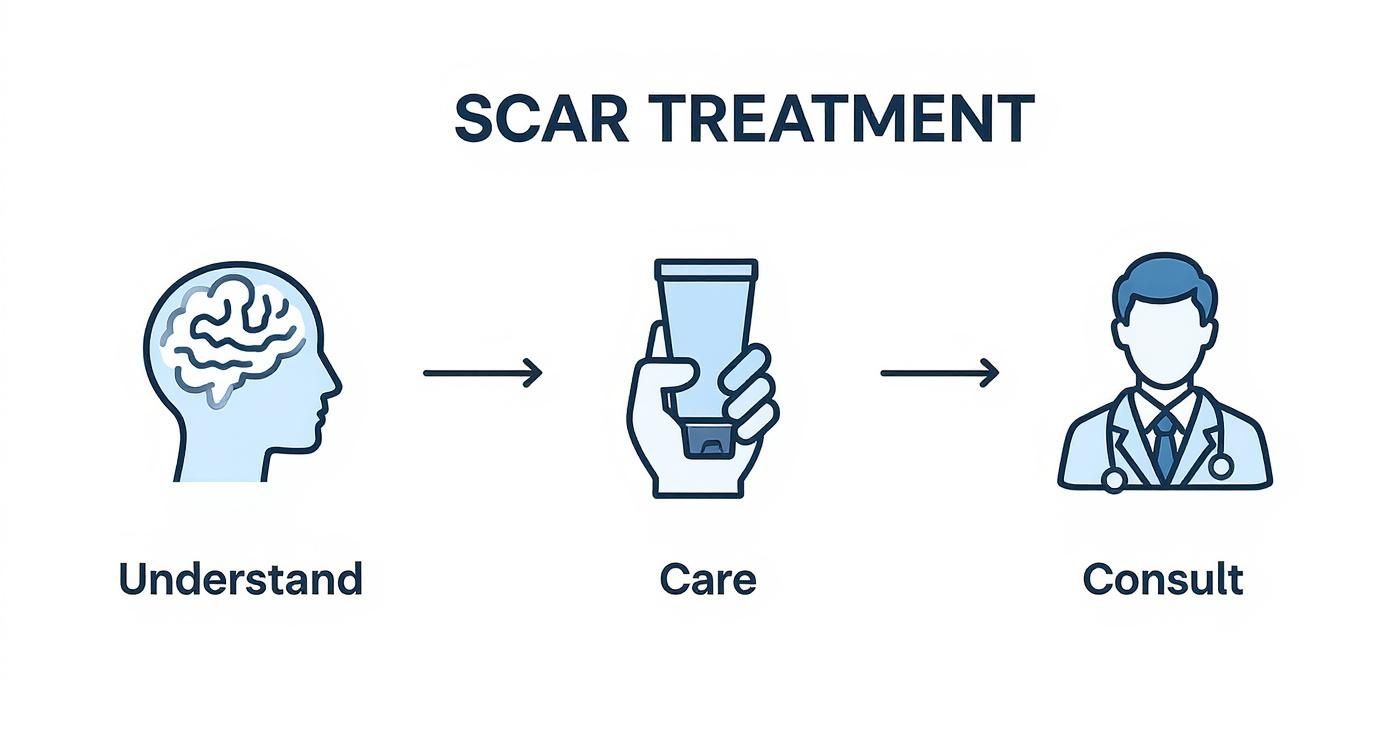
This straightforward process is the key to a better outcome.
The Overlooked Factor: Sun Protection
Once the wound has fully closed and new skin has formed, your job isn't done. Protecting this delicate new tissue from the sun is non-negotiable if you want to avoid a dark, obvious scar.
New skin contains pigment-producing cells that are extremely sensitive to ultraviolet (UV) light. Sun exposure on a healing scar can easily trigger post-inflammatory hyperpigmentation, causing the scar to turn brown or red. According to the American Academy of Dermatology (AAD), this discoloration can last for years and often makes a scar more noticeable than its texture.
"Sunscreen is not just for the beach. For a healing scar, it's a critical part of the treatment protocol. A few seconds of application each day can prevent years of discoloration." – Dr. Feigenbaum, Mid-County Dermatology
We tell all our patients, from Clayton to Chesterfield, to be vigilant about sun protection for at least a year after their injury.
Choose the Right Sunscreen: Look for a broad-spectrum sunscreen with an SPF of 30 or higher. Mineral-based options with zinc oxide or titanium dioxide are often best for sensitive, healing skin as they are less likely to cause irritation.
Apply and Reapply: Apply generously 15-20 minutes before going outside. Reapply every two hours, and more often if you're swimming or sweating.
Making sunscreen a daily habit is one of the most powerful things you can do. For more advice, check out these sunscreen tips from St. Louis dermatology professionals.
Effective At-Home Scar Treatments
Once your wound has fully closed, the focus shifts to improving the new scar’s appearance as it matures. The great news is you don’t always have to jump straight to in-office procedures. Evidence-based options available at your local pharmacy can make a real difference.
For many of our patients here in St. Louis, we've seen that simple, consistent use of the right over-the-counter (OTC) products can dramatically improve a scar's final texture and color.
The Gold Standard: Silicone Gels and Sheets
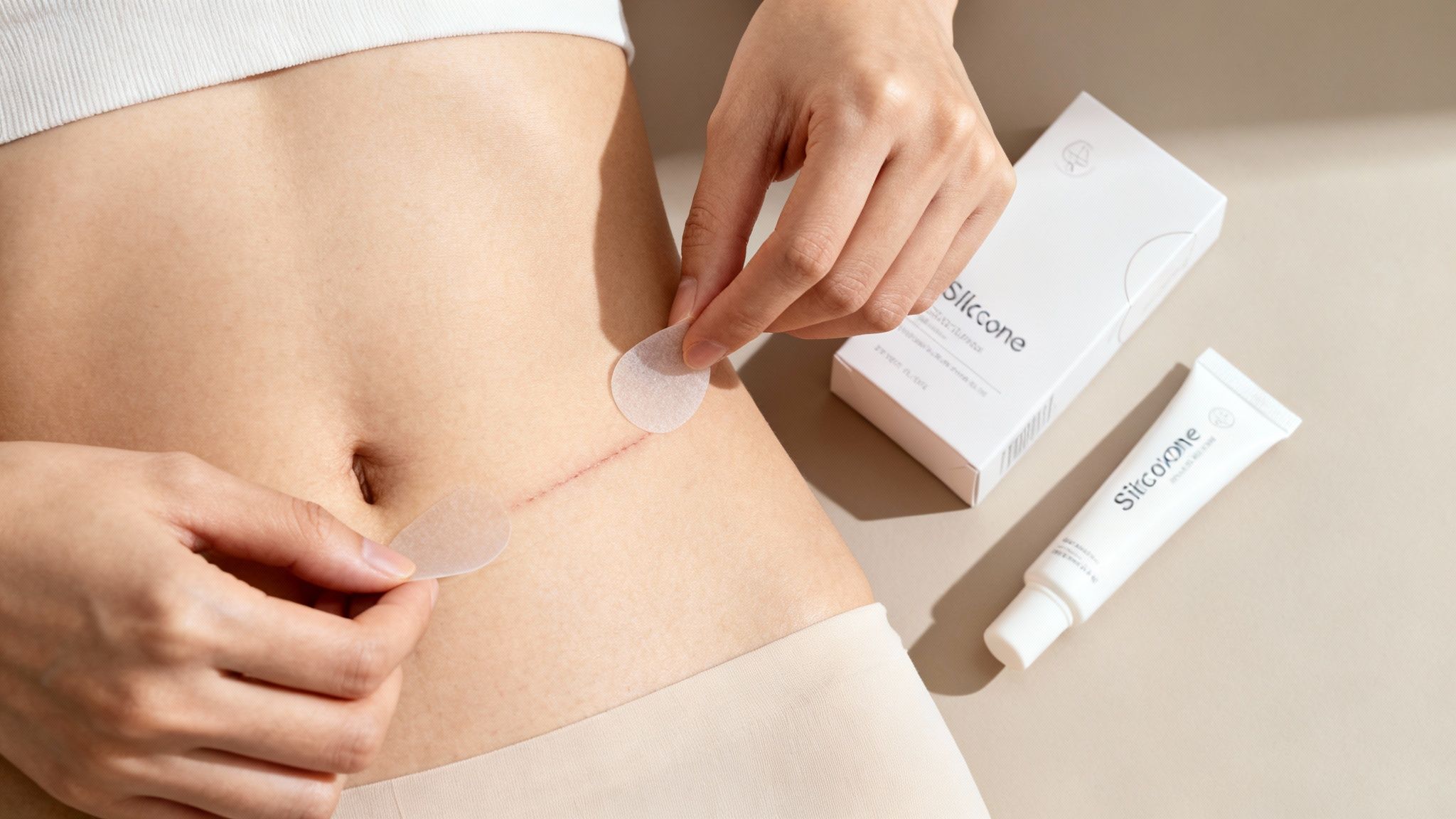
When patients ask for the most proven at-home scar treatment, our answer is almost always silicone. Both Dr. Feigenbaum and Dr. Gibstine recommend it as a first-line therapy, especially for new hypertrophic or keloid scars, because the clinical evidence is incredibly strong.
Silicone creates a breathable, flexible barrier over the scar. This does two critical things: it locks in hydration and helps regulate the production of fibroblasts—the cells responsible for building collagen. By creating this controlled environment, silicone helps prevent your body from producing too much collagen, which leads to thick, raised scars.
Topical scar treatments are a huge market, making up over 60% of global scar treatment sales. You can dig deeper into the growth and effectiveness of these treatments in recent analyses.
To get the most out of silicone therapy, diligence is key:
Start Early: Begin applying it as soon as the wound is fully closed.
Be Consistent: Wear the sheets or apply the gel for at least 12 hours a day, every day, for a minimum of two to three months.
Keep It Clean: Wash the scar area and the silicone sheet (if reusable) daily to avoid skin irritation.
Exploring Other OTC Ingredients
Wandering the pharmacy aisle, you'll see more than just silicone. As your dedicated St. Louis skin specialists, we want to guide you toward what research actually supports.
Treatment Type | How It Works | Best For These Scars | Evidence Level |
|---|---|---|---|
Silicone Gels/Sheets | Creates a hydrating barrier to regulate collagen production, preventing overgrowth. | New hypertrophic and keloid scars; postsurgical scars. | High |
Onion Extract (Allium Cepa) | Has anti-inflammatory and some collagen-regulating properties. | Minor surface scars and reducing redness. Less potent than silicone. | Moderate |
Vitamin E | An antioxidant. Its direct effect on scars is not proven; can cause skin irritation. | General skin health, but not recommended specifically for scar reduction. | Low / Inconclusive |
Vitamin C | An antioxidant that inhibits pigment production, helping to fade discoloration. | Post-inflammatory hyperpigmentation (dark spots). | High (for discoloration) |
Let's look closer at these ingredients:
Onion Extract (Allium Cepa): Found in popular gels like Mederma, it has anti-inflammatory properties and may help soften scar tissue. However, its effects are generally less powerful than silicone.
Vitamin E: This is tricky. While a great antioxidant, research on its direct benefit for scars is inconclusive. A study in Dermatologic Surgery (1999) showed it provided no benefit and caused contact dermatitis in about a third of users.
Vitamin C: A powerhouse ingredient we love. While not a primary agent for remodeling scar tissue, its ability to inhibit pigment production is incredibly helpful for the discoloration left after a wound heals. Learn more in our Mid-County Dermatology guide to topical Vitamin C.
Ultimately, a powerful at-home strategy combines a proven ingredient like silicone with vigilant, daily sun protection.
When to See a Dermatologist: Professional Scar Revision
You've been diligent with at-home care, but the scar isn't fading as you'd hoped. This is exactly when a St. Louis dermatologist can step in with more powerful, targeted solutions. Here at Mid-County Dermatology, we see patients from all over the St. Louis area, including Ladue and Frontenac, who are ready to take the next step.
Unlike topical products, in-office procedures remodel scar tissue from the inside out, addressing texture, color, and depth in ways creams simply can't.
Laser Therapy for Texture and Color
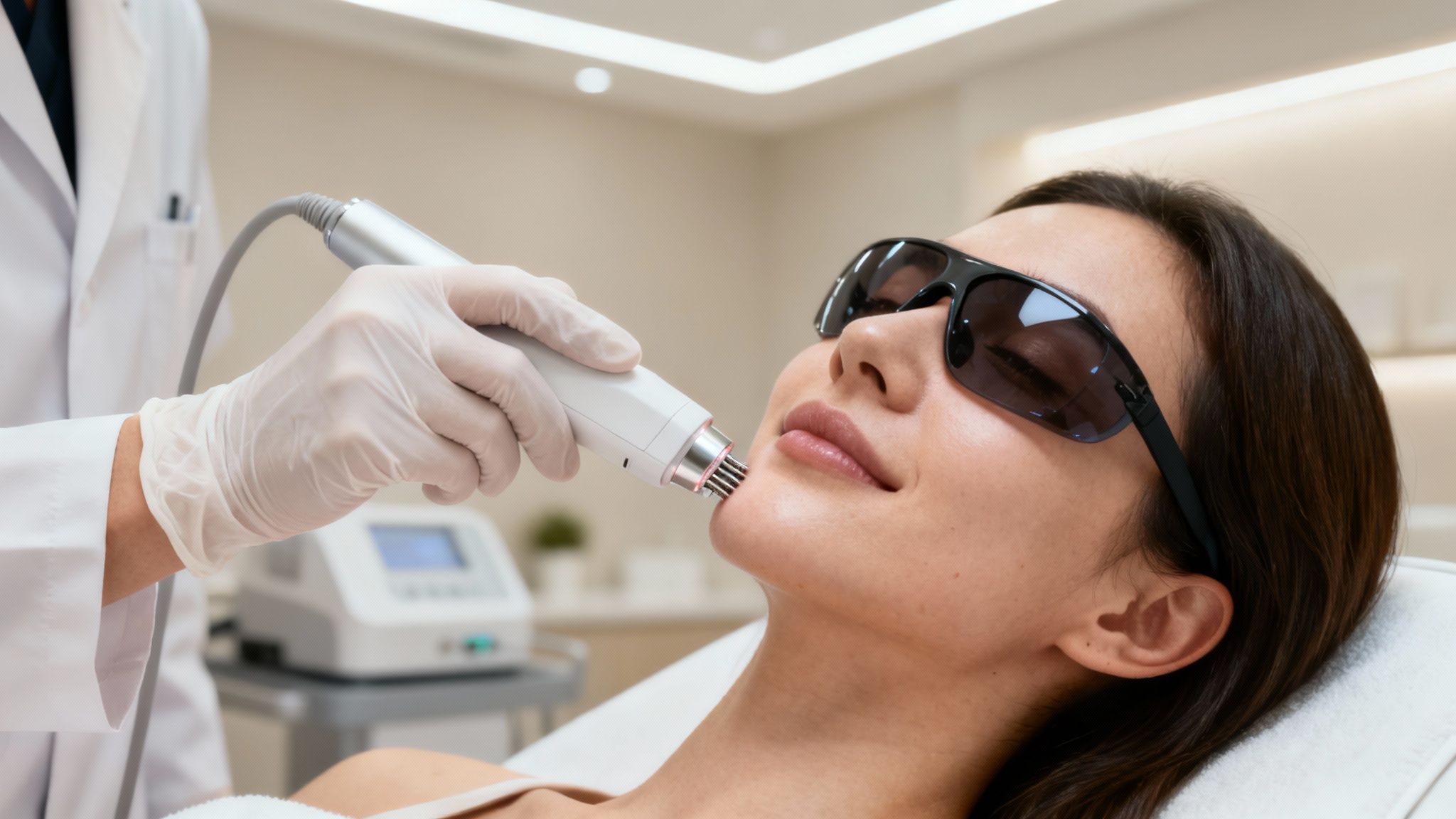
Laser treatments are one of the most effective tools for scar revision. Different types of lasers can zero in on specific issues, whether it's uneven texture or stubborn discoloration.
Resurfacing the Skin: For textured scars, ablative lasers like the CO2 laser remove damaged outer layers of skin, signaling your body to generate a smoother surface.
Reducing Redness: A pulsed-dye laser (PDL) targets the tiny blood vessels that cause discoloration, evening out skin tone without affecting surrounding tissue.
Stimulating New Collagen: Non-ablative fractional lasers create tiny columns of heat deep in the skin, prompting a powerful healing response and production of new, healthy collagen.
Most patients need a series of treatments, but the improvement can be truly remarkable.
Microneedling to Rebuild From Within
Microneedling is a go-to for improving a wide range of scars, particularly atrophic (indented) acne scars. This minimally invasive technique uses a device with fine, sterile needles to create thousands of controlled micro-injuries in the skin.
This process jump-starts your skin's natural repair cycle, triggering the production of new collagen and elastin. As your skin heals, it fills in indented scars from the bottom up, leading to a much more even surface. Our patients at Mid-County Dermatology appreciate the minimal downtime and natural-looking results. You can explore the details of microneedling treatments on our site.
Targeted Solutions for Specific Scars
Not all scars are created equal. As expert St. Louis skin specialists, Dr. Feigenbaum and Dr. Gibstine will assess your unique scar to map out the most effective plan.
Steroid Injections: For raised, thick scars like keloids and hypertrophic scars, corticosteroid injections are often the first line of defense. They are injected directly into the scar to break down excess collagen and calm inflammation.
Dermal Fillers: For rolling or indented scars, dermal fillers offer immediate improvement. A substance like hyaluronic acid is injected beneath the scar to lift the depression. Results are temporary (typically 6-18 months) but provide instant gratification.
Chemical Peels: A medium-depth chemical peel can be excellent for the discoloration and minor textural issues left by acne, revealing a brighter, more evenly toned layer.
"The goal of advanced scar revision isn't to chase perfection, but to achieve significant improvement that restores confidence. The right procedure, in the hands of an experienced dermatologist, can truly change how a person feels about their skin." – Dr. Gibstine, Mid-County Dermatology
For very large or complex scars, a surgical approach may be best. You can explore resources that detail Scar Revision Surgery and what it can achieve.
Clear Signs It's Time for a Professional Consultation
While at-home treatments are powerful, they have limits. Knowing when to call in a professional is key to getting the results you want and can prevent a scar from getting worse. Consulting an expert St. Louis skin doctor is the fastest way to get an accurate diagnosis and a tailored treatment plan.
Consider booking a consultation at Mid-County Dermatology if you notice your scar is:
Raised and Growing: If scar tissue grows beyond the original wound's boundaries, you might have a keloid. These require specialized treatments like steroid injections. Learn more about what causes keloid scars and how they are treated.
Significantly Sunken or Pitted: Atrophic scars, common after severe acne, are depressions that no topical cream can fill. Professional treatments like microneedling or fillers are needed to lift these indentations.
Painful, Itchy, or Tender: A constantly uncomfortable scar signals ongoing inflammation. A dermatologist can determine the cause and provide relief.
Restricting Your Movement: A scar over a joint that tightens and limits your range of motion is called a contracture scar and almost always requires medical intervention.
Impacting Your Well-Being: A scar doesn't have to be physically debilitating to be worth treating. If its appearance causes you distress or makes you feel self-conscious, that is a valid reason to explore your options.
Key Takeaways: Your Path to Smoother Skin
Making a scar less noticeable is a journey. The path is paved with smart prevention, consistent at-home care, and professional help when needed.
Smart Wound Care From Day One: Proper cleaning, keeping the wound moist, and relentless sun protection are your most powerful first moves against a prominent scar.
The Best At-Home Treatments: Once the skin has closed, silicone gels or sheets are the gold standard for at-home care, helping to flatten, soften, and fade scar tissue.
When to Call the Pros: For stubborn, deep, or bothersome scars, a dermatologist has tools like lasers and microneedling that can tackle tough texture and discoloration head-on.
Here at Mid-County Dermatology, our goal is to give you the knowledge and personalized options to feel in control. We welcome our neighbors from Creve Coeur, Chesterfield, and the greater St. Louis area for a consultation. Dr. Feigenbaum and Dr. Gibstine, your trusted St. Louis skin specialists, will work with you to map out a clear path toward healthier, more confident skin.
Frequently Asked Questions About Scar Treatment
What is the most effective scar treatment?
There is no single “best” treatment. The right approach depends on the scar's type, age, and location, as well as your skin type. For newer, raised scars, silicone sheets are a great starting point. For deeper or older scars, professional treatments like laser therapy or microneedling performed by a board-certified dermatologist will deliver the most significant results. A personalized consultation with a St. Louis skin specialist is the best way to determine your ideal plan.
How long does it take to see results from scar treatments?
Patience is key. Skin needs time to remodel. With consistent daily use of over-the-counter products like silicone, you may see initial improvements in 8 to 12 weeks. For professional procedures like laser therapy, you'll typically need a series of sessions spaced 4-6 weeks apart, with final results emerging several months after your last treatment as new collagen forms.
Can old scars be improved?
Absolutely. It is never too late to treat a scar. Modern dermatology offers effective treatments for old scars. Procedures like fractional laser resurfacing and microneedling are designed to break down old, disorganized scar tissue and stimulate the body to create new, smoother skin in its place, significantly improving texture and color.
Will my insurance cover scar revision?
Coverage depends on whether the treatment is considered cosmetic or medically necessary. If a scar's appearance is the only concern, insurance rarely covers it. However, if a scar is painful, intensely itchy, or restricts movement (a contracture scar), insurance may cover some or all of the cost. The administrative team at Mid-County Dermatology in St. Louis can help you navigate your benefits and provide necessary documentation.
Ready to take the next step towards smoother, more confident skin? The expert team at Mid-County Dermatology is here to create a personalized treatment plan for you. Schedule your consultation with Dr. Feigenbaum or Dr. Gibstine today.
This information is for educational purposes only and does not constitute medical advice. Please consult with Dr. Feigenbaum, Dr. Gibstine, or another qualified healthcare provider at Mid-County Dermatology for personalized treatment recommendations. Individual results may vary.


Comments