
Dermatologist Guide: 10 Common Skin Rashes in Adults
It starts with a small, itchy spot. Before you know it, a full-blown rash has taken over, leaving you confused and uncomfortable. You're not alone; identifying common skin rashes in adults can be challenging, but understanding the cause is the first step toward relief. Whether you're in Clayton, Chesterfield, or anywhere in the greater St. Louis area, getting the right diagnosis from a trusted St. Louis Dermatologist is crucial for effective treatment.
This comprehensive guide, brought to you by the expert St. Louis dermatologists Dr. Feigenbaum and Dr. Gibstine at Mid-County Dermatology, will walk you through 10 of the most frequent rashes we see in our practice. We will break down the tell-tale signs, common triggers, and effective treatment options for each condition, from contact dermatitis and eczema to psoriasis and rosacea.
Our goal is to provide clear, evidence-based information to help you understand what's happening with your skin. You will learn what you can manage at home and, more importantly, recognize the signs that indicate it’s time to seek professional care from a board-certified St. Louis skin specialist. Let's get to the bottom of that rash and get you back to feeling comfortable in your own skin.
What You Need to Know: A Quick Overview
Navigating skin rashes can be tricky. Here are the key points to remember before we dive into the details:
Accurate Diagnosis is Key: Many rashes look alike. An expert diagnosis from a St. Louis skin doctor ensures you get the right treatment.
Triggers Matter: Identifying what causes your rash (e.g., allergens, stress, weather) is essential for long-term management.
Professional Help is Available: While some rashes respond to at-home care, persistent or severe conditions require a dermatologist's expertise. The team at Mid-County Dermatology serves patients across the St. Louis area, including Ladue and Creve Coeur.
1. Contact Dermatitis
Contact dermatitis is an extremely common skin rash in adults, triggered when your skin touches a substance that either irritates it or causes an allergic reaction. According to research in the Journal of the American Academy of Dermatology, this red, itchy rash is one of the most common reasons for dermatology visits (Bains, S. N., et al., 2022). This rash is not contagious or life-threatening, but it can be very uncomfortable. As a leading St. Louis dermatology practice, Mid-County Dermatology frequently diagnoses this condition.
There are two main types:
Irritant Contact Dermatitis: This is the more common type. It happens when your skin is exposed to a harsh substance like a chemical, solvent, or even soap, which damages the skin's outer protective layer.
Allergic Contact Dermatitis: This occurs when your skin develops an allergic reaction to a substance. Common culprits include nickel in jewelry, fragrances, and the oils found in poison ivy.
Management and At-Home Care
Managing contact dermatitis involves identifying and avoiding the trigger. If you experience a rash from poison ivy, for example, immediate and thorough washing is crucial. To soothe symptoms at home, apply cool compresses to the affected area and use gentle, fragrance-free moisturizers to restore the skin barrier. For persistent cases or severe reactions, a board-certified St. Louis dermatologist at our office can prescribe topical corticosteroids to reduce inflammation effectively. Learn more about treating poison ivy rashes from our St. Louis dermatology experts.
2. Eczema (Atopic Dermatitis)
Eczema, also known as atopic dermatitis, is a chronic inflammatory skin condition that is one of the most common skin rashes in adults and children. It causes intensely itchy, dry, and inflamed patches of skin. This condition often starts in childhood but can persist into or even begin in adulthood. At Mid-County Dermatology, our St. Louis skin specialists frequently help patients in Clayton and Creve Coeur manage this challenging, non-contagious condition, which stems from a combination of genetic and environmental factors.
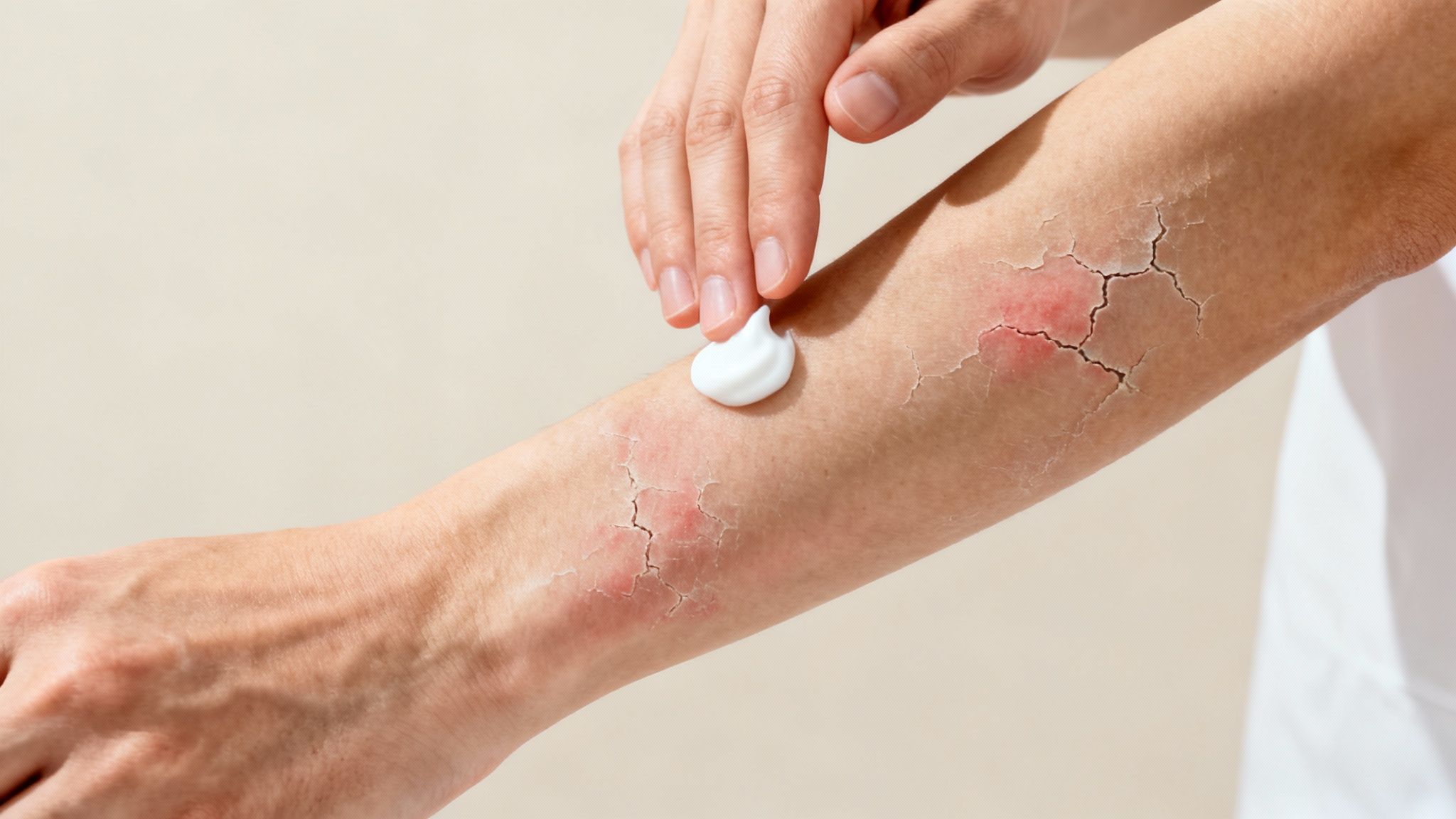
The hallmark of eczema is a compromised skin barrier, which makes the skin more sensitive to irritants and allergens, as noted by the American Academy of Dermatology (AAD). Common triggers for flare-ups include:
Environmental Factors: Dry air, allergens like pollen and dust mites, and harsh soaps can all provoke symptoms.
Stress: Emotional stress is a well-known trigger that can worsen eczema flare-ups.
Fabrics: Irritating materials like wool or certain synthetic fabrics can cause itching and discomfort.
Management and At-Home Care
Effective management of eczema focuses on restoring the skin's barrier and reducing inflammation. A consistent daily skincare routine is essential. Moisturize with a thick, fragrance-free cream within three minutes of bathing in lukewarm water to lock in hydration. Wearing soft, breathable fabrics like cotton can also minimize skin irritation. For persistent or severe flare-ups, a board-certified dermatologist may prescribe topical corticosteroids or other anti-inflammatory medications. Our St. Louis dermatology experts can create a personalized plan to control your symptoms. Learn more about our St. Louis dermatologist's advice for eczema treatment.
3. Psoriasis
Psoriasis is a chronic autoimmune condition that significantly accelerates the life cycle of skin cells, causing them to build up rapidly on the skin's surface. This buildup forms thick, scaly, and often itchy patches known as plaques. As a leading St. Louis dermatology practice, Mid-County Dermatology regularly helps patients manage this common skin rash, which is not contagious but results from an overactive immune system.
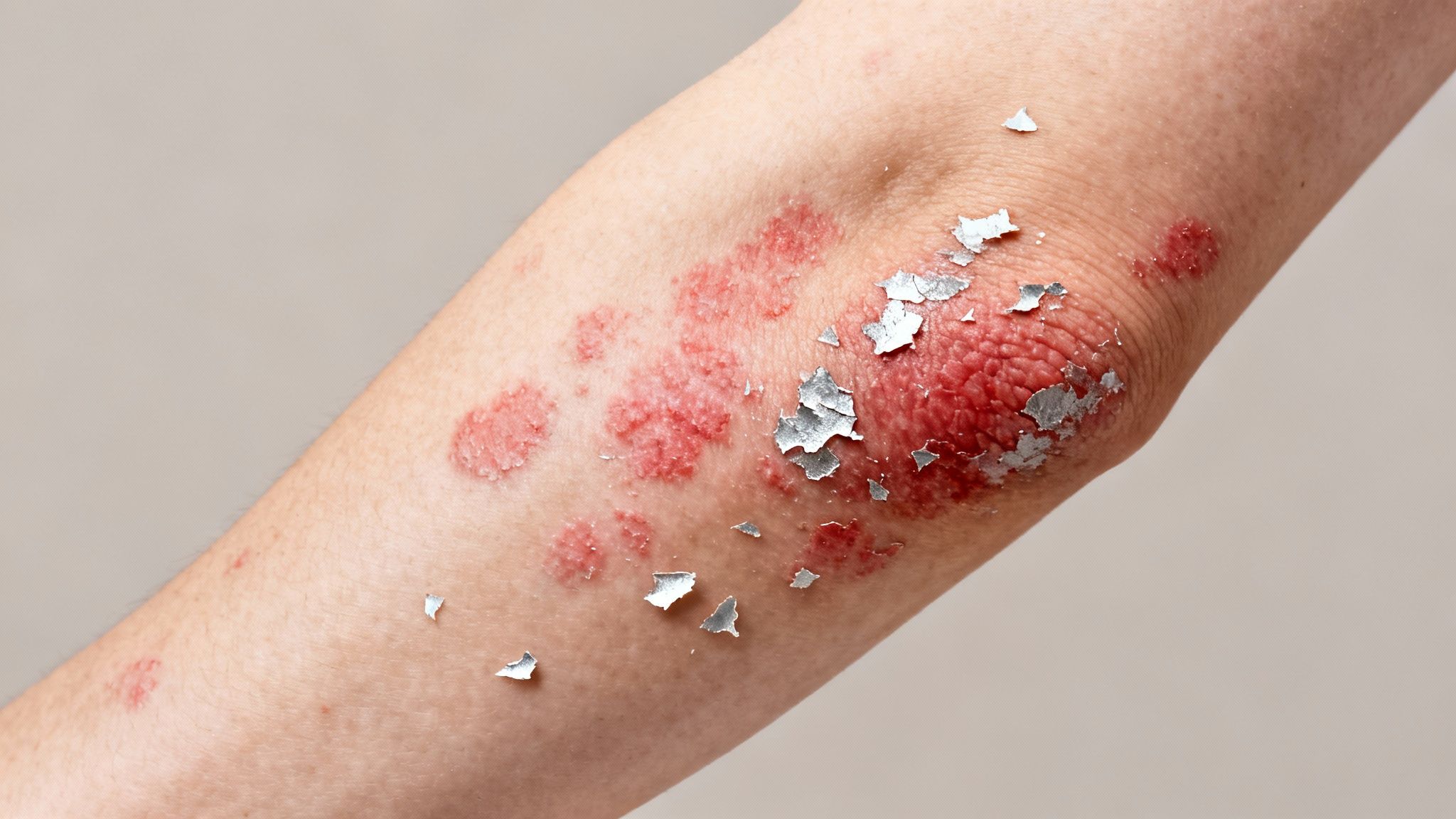
While the exact cause is not fully understood, genetics and immune system factors play key roles. Common types of psoriasis include:
Plaque Psoriasis: The most common form, causing dry, raised, red skin lesions covered with silvery scales.
Guttate Psoriasis: Often triggered by a bacterial infection like strep throat, it appears as small, water-drop-shaped sores on the trunk, arms, and legs.
Inverse Psoriasis: Affects skin folds of the groin, buttocks, and under the breasts, causing smooth patches of red, inflamed skin that worsen with friction and sweating.
Management and At-Home Care
Managing psoriasis involves a combination of lifestyle adjustments and medical treatments to reduce inflammation and clear the skin. It's crucial to keep your skin well-moisturized to reduce redness and itching, and to avoid known triggers like stress, skin injuries, and excessive alcohol consumption. For scalp psoriasis, specialized shampoos containing salicylic acid or coal tar can be very effective. For more persistent or widespread cases, the board-certified dermatologists at our St. Louis office may recommend topical corticosteroids, phototherapy, or systemic medications. Learn more about psoriasis management in St. Louis from our experts.
4. Urticaria (Hives)
Urticaria, commonly known as hives, is a skin reaction that causes raised, itchy welts to suddenly appear. These welts, or wheals, can vary in size and often disappear within 24 hours, though new ones may form. Affecting up to 20% of people at some point in their lives, this common skin rash in adults is caused by the release of histamine from mast cells in the skin.
Hives are typically categorized into two main types:
Acute Urticaria: This is the most frequent form, where the rash lasts for less than six weeks. It is often triggered by an allergic reaction to food, medications, insect stings, or an infection.
Chronic Urticaria: When hives persist for more than six weeks, it is considered chronic. The exact cause can be difficult to identify, though it is sometimes linked to autoimmune conditions.
Management and At-Home Care
The primary goal in managing urticaria is to identify and avoid potential triggers. Keeping a detailed diary of your foods, activities, and medications can help pinpoint the cause. To relieve itching at home, you can apply cool compresses to the affected areas, take lukewarm baths, and wear loose, soft clothing to minimize irritation. Over-the-counter antihistamines are often the first line of treatment. If symptoms are severe, persistent, or accompanied by swelling of the face or difficulty breathing, it's crucial to seek immediate medical attention. A board-certified St. Louis dermatologist at Mid-County Dermatology can provide a thorough evaluation and prescribe stronger medications to control the outbreak effectively.
5. Fungal Infections (Tinea/Ringworm)
Fungal infections, medically known as tinea and commonly called ringworm, are contagious rashes caused by fungi, not a worm as the name suggests. These infections are incredibly prevalent among common skin rashes in adults, thriving in warm, moist environments. At Mid-County Dermatology, our St. Louis dermatologists often see cases affecting the feet (tinea pedis or athlete's foot), groin (tinea cruris or jock itch), and body (tinea corporis).
These fungi, called dermatophytes, feed on keratin, a protein found in your skin, hair, and nails. This leads to the characteristic symptoms:
Ring-shaped Rash: A classic sign is a circular, red, and itchy patch with clearer skin in the middle.
Scaling and Cracking: The affected skin may become scaly, flaky, or cracked, especially between the toes in athlete's foot.
Itching and Burning: Discomfort is a common complaint, ranging from mild itching to a more intense burning sensation.
Management and At-Home Care
Managing a fungal infection requires keeping the skin clean, dry, and consistently treated. Over-the-counter antifungal creams, sprays, or powders are often effective for mild cases. However, it's crucial to continue treatment for the full recommended duration, even if symptoms improve, to prevent recurrence. To prevent spreading the infection, avoid sharing towels, clothing, or personal items. For persistent or widespread infections, a board-certified St. Louis skin specialist can prescribe stronger topical or oral antifungal medications. Learn more about another common fungal issue, tinea versicolor, from our dermatology experts.
6. Rosacea
Rosacea is a chronic inflammatory skin condition that is frequently diagnosed among the common skin rashes in adults. It primarily affects the face, causing persistent redness, visible blood vessels, and sometimes small, red, pus-filled bumps that can be mistaken for acne. While its exact cause is unknown, rosacea is thought to involve a combination of genetic predisposition and environmental factors. This condition often appears in adults between 30 and 50 years old, particularly those with fair skin.
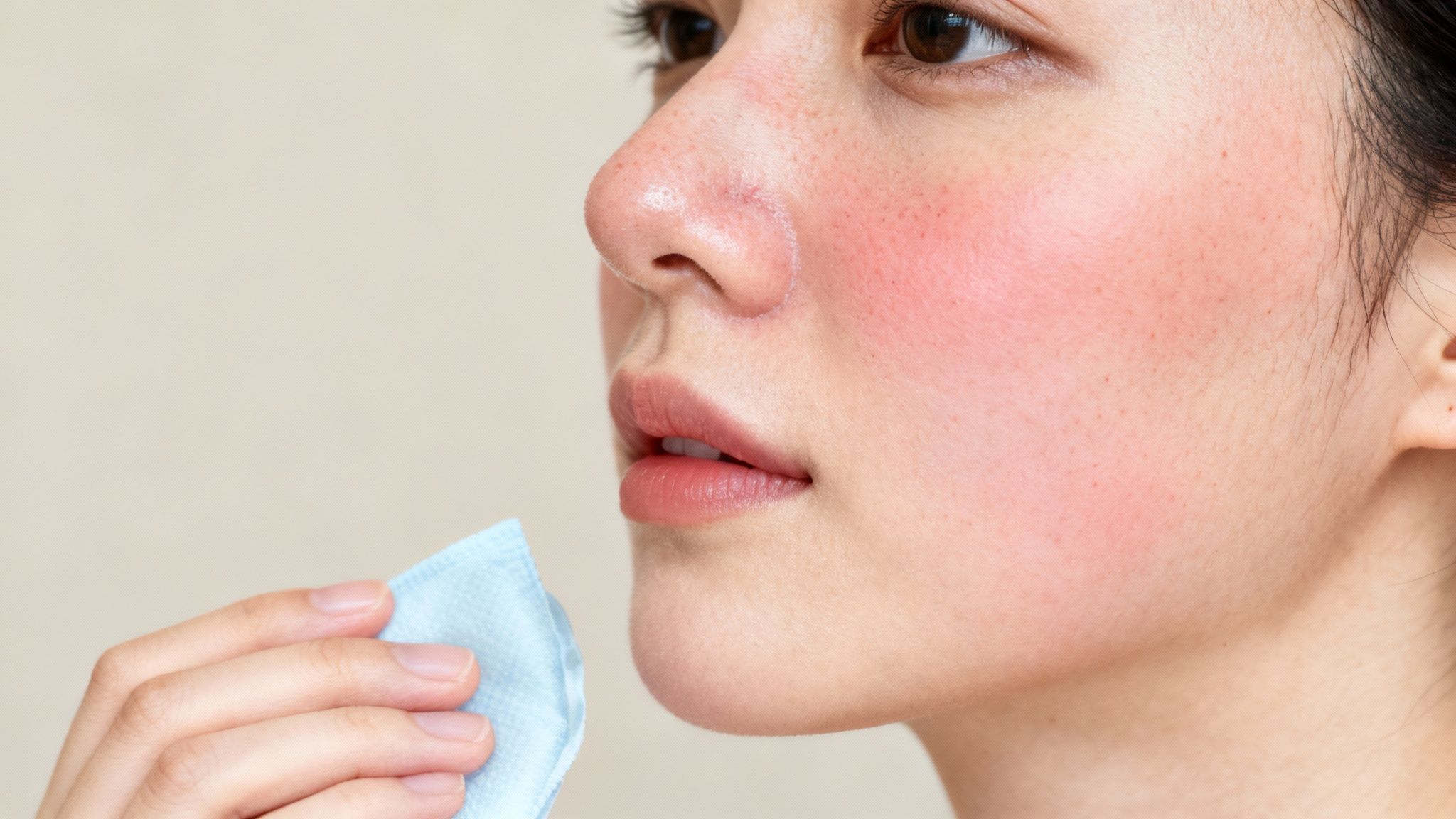
There are four main subtypes of rosacea, each with distinct symptoms:
Erythematotelangiectatic Rosacea (ETR): Characterized by facial redness, flushing, and visible blood vessels.
Papulopustular Rosacea: Often called "acne rosacea," it includes redness, swelling, and acne-like breakouts.
Phymatous Rosacea: A rarer subtype that causes the skin to thicken and develop a bumpy texture, typically around the nose (rhinophyma).
Ocular Rosacea: Affects the eyes, causing them to be red, irritated, and watery, with swollen eyelids.
Management and At-Home Care
Managing rosacea focuses on identifying and avoiding personal triggers that cause flare-ups. Common triggers include sun exposure, stress, spicy foods, alcohol, and extreme temperatures. A key strategy is to use a gentle skincare routine with fragrance-free products and apply a broad-spectrum sunscreen with SPF 30 or higher every day. Avoid harsh scrubbing and use lukewarm water when cleansing. For persistent symptoms, a St. Louis dermatologist at Mid-County Dermatology can provide a definitive diagnosis and recommend prescription treatments, such as topical medications to reduce redness and inflammation or oral antibiotics for more severe cases.
7. Seborrheic Dermatitis
Seborrheic dermatitis is a very common skin condition that mainly affects your scalp. Known for causing stubborn dandruff, scaly patches, and red skin, it is a chronic inflammatory disorder. It can also affect other oily areas of the body, such as the face, sides of the nose, eyebrows, ears, and chest. While it is not contagious, this rash can be persistent and is often linked to a reaction to Malassezia yeast, a normal inhabitant of the skin's surface.
This condition is one of the common skin rashes in adults that we frequently diagnose for patients from Clayton to Chesterfield. It is characterized by periods of flare-ups and remission.
On the Scalp: It often presents as simple dandruff, with fine, white, or yellowish greasy scales. In more severe cases, it can cause significant itching, redness, and thicker crusting.
On the Face and Body: Affected areas may appear red with greasy scales. It commonly occurs in the eyebrows, on the sides of the nose, and behind the ears.
Management and At-Home Care
Managing seborrheic dermatitis focuses on loosening and removing scales, preventing skin infections, and reducing inflammation and itching. Consistency is key, as this is often a long-term condition. Using over-the-counter medicated shampoos containing ingredients like ketoconazole, selenium sulfide, or zinc pyrithione can be very effective for the scalp. For the face and body, gentle, fragrance-free cleansers are recommended.
It is important to avoid harsh products that can irritate the skin and worsen the condition. If at-home care doesn't provide relief, a board-certified dermatologist at Mid-County Dermatology can offer prescription-strength shampoos, creams, or ointments to control symptoms and manage flare-ups effectively.
8. Chickenpox and Shingles (Varicella-Zoster Virus)
Chickenpox and shingles are two distinct but related rashes caused by the same virus, the varicella-zoster virus (VZV). While chickenpox is a well-known childhood illness, shingles is a common skin rash in adults, representing a reactivation of that same virus. After you recover from chickenpox, the virus lies dormant in nerve tissue near your spinal cord and brain. Years later, it can reawaken as shingles, causing a painful, blistering rash.
The two conditions present differently:
Chickenpox: An itchy rash of small, fluid-filled blisters that appear all over the body. It is highly contagious until all blisters have scabbed over.
Shingles (Herpes Zoster): A painful rash that develops as a stripe of blisters on one side of the body, typically the torso. The pain, tingling, or itching can begin several days before the rash appears.
Management and At-Home Care
For shingles, early intervention is key to reducing pain and preventing complications. If you suspect shingles, it's crucial to see a board-certified dermatologist, like those at our St. Louis office, within 72 hours of the rash appearing. They can prescribe antiviral medications to shorten the duration and severity of the infection. At home, you can manage discomfort by applying cool compresses, taking oatmeal baths, and wearing loose, soft clothing to avoid irritating the blisters. For the persistent nerve pain that can follow shingles, a St. Louis skin specialist can discuss effective pain management strategies. The best defense is prevention, which includes the chickenpox vaccine for children and the shingles vaccine for adults over 50.
9. Pityriasis Rosea
Pityriasis rosea is a distinct, temporary skin rash that often begins with a single, large oval patch called a "herald patch." This initial spot is typically followed days or weeks later by a more widespread rash of smaller, scaly patches on the chest, back, and abdomen. While its exact cause is unknown, it's believed to be triggered by a viral infection. The rash is not contagious and usually resolves on its own within 6-8 weeks.
Although generally benign, the appearance of pityriasis rosea can be concerning for many patients who visit our St. Louis dermatology office. The rash often forms a pattern resembling the branches of a Christmas tree on the back, which is a key diagnostic feature. The condition is most common in adolescents and young adults, but it can affect people of all ages.
Management and At-Home Care
Since pityriasis rosea is self-limiting, treatment focuses on relieving symptoms, particularly itching. Using gentle, fragrance-free skincare products and applying moisturizers can help reduce dryness and discomfort. Taking lukewarm baths and avoiding harsh soaps will prevent further irritation to the skin. For significant itching, oral antihistamines or topical corticosteroids can provide relief. If symptoms are severe or persistent, a board-certified St. Louis dermatologist at Mid-County Dermatology might recommend UVB phototherapy. It's important to avoid scratching the rash to prevent secondary skin infections.
10. Acne Rosacea (Acneiform Eruptions)
Acne rosacea, part of a broader category of acneiform eruptions, is a common skin condition in adults that causes redness, visible blood vessels, and sometimes small, red, pus-filled bumps on the face. Unlike teenage acne, these acne-like lesions in adulthood often point to different triggers, such as inflammation or underlying skin sensitivity, rather than just clogged pores. At Mid-County Dermatology, our board-certified St. Louis dermatologists frequently distinguish this condition from traditional acne to ensure proper treatment.
This group of skin conditions can present in several ways, often mimicking common acne:
Steroid Acne: Can be triggered by the use of corticosteroids.
Gram-Negative Folliculitis: A bacterial infection that can occur after long-term antibiotic use for acne.
Acneiform Drug Eruptions: Certain medications can cause breakouts as a side effect.
Management and At-Home Care
Managing acneiform eruptions starts with identifying and addressing potential triggers. Maintaining excellent facial hygiene with gentle, non-comedogenic cleansers and moisturizers is fundamental. Avoid heavy cosmetics or products that can clog pores (comedogenic). It's also crucial to avoid frequently touching your face, which can transfer bacteria and irritate the skin. If you develop a sudden acne-like rash as an adult, especially in areas like Chesterfield or Clayton, consulting a St. Louis Dermatology expert is key. They can diagnose the specific cause and recommend targeted treatments designed to reduce inflammation and control breakouts without disrupting your skin's natural balance.
When to See a St. Louis Dermatologist
While at-home care can manage mild rashes, certain signs indicate it’s time to seek professional help. Book an appointment with Dr. Feigenbaum or Dr. Gibstine at Mid-County Dermatology if you experience any of the following:
Your rash is spreading rapidly or covers your whole body.
You have a fever or feel ill along with the rash.
The rash is painful or starts to blister.
Over-the-counter treatments aren't providing relief after a week.
The rash is interfering with your daily life or sleep.
You suspect an infection (e.g., pus, warmth, red streaks).
Key Takeaways
Understanding common skin rashes is the first step toward effective relief.
Diagnosis is Paramount: An accurate diagnosis from a board-certified dermatologist is the most critical step.
Avoid Triggers: Identifying and avoiding what causes your flare-ups is key to long-term management.
Moisturize & Protect: A consistent, gentle skincare routine can support your skin barrier and reduce symptoms for many conditions.
Don't Hesitate to Seek Help: For persistent, severe, or concerning rashes, professional care from a St. Louis skin specialist is essential.
Frequently Asked Questions (FAQ)
1. What is the most common cause of skin rashes in adults?Contact dermatitis, caused by irritants or allergens, is one of the most frequent causes. However, many factors including genetics (eczema, psoriasis), infections (fungal, viral), and immune system responses (hives) can trigger common rashes. A St. Louis dermatologist can determine the specific cause.
2. How do I know if my rash is serious?A rash is considered serious and requires immediate medical attention if it's accompanied by fever, difficulty breathing, spreads rapidly, is painful, or begins to blister. For any concerns, it's always best to consult a St. Louis skin doctor like Dr. Feigenbaum or Dr. Gibstine at Mid-County Dermatology.
3. Can stress cause a skin rash?Yes, stress is a well-documented trigger that can cause or worsen several common skin rashes in adults, including eczema, psoriasis, and hives. Managing stress through techniques like mindfulness and exercise can be a helpful part of a comprehensive treatment plan.
4. When should I see a dermatologist for a rash?You should see a dermatologist if your rash persists for more than a week despite using over-the-counter treatments, is severe, painful, or significantly impacts your quality of life. An accurate diagnosis from a St. Louis dermatology expert is crucial for effective treatment.
Ready to get a definitive diagnosis and personalized treatment plan for your skin concerns? The board-certified St. Louis dermatologists at Mid-County Dermatology are here to help patients in Frontenac, Creve Coeur, and across the St. Louis area. Schedule your consultation today to take the most important step toward clearer, healthier skin.
This information is for educational purposes only and does not constitute medical advice. Please consult with Dr. Feigenbaum, Dr. Gibstine, or another qualified healthcare provider at Mid-County Dermatology for personalized treatment recommendations. Individual results may vary.


Comments