
How to Prepare for Botox Injections for the Best Results
Updated: 2 days ago
Thinking about getting Botox is exciting, but you might wonder how to get the best, smoothest results. A little preparation goes a long way. Just like a painter preps a canvas, taking a few simple steps before your appointment can make a significant difference.
Following some key guidelines—like pausing certain medications, avoiding alcohol for a couple of days, and arriving with a clean face—is crucial. This isn't just about following rules; it's about actively minimizing risks like bruising and ensuring your treatment is as effective as possible. Here at Mid-County Dermatology, our board-certified St. Louis dermatologists are here to guide you.
Your Pre-Botox Game Plan for a Smooth Experience
Getting ready for your Botox appointment is more than just circling a date on your calendar. A well-thought-out plan is key to ensuring your safety, maximizing your comfort, and achieving the best possible outcome.
Here at Mid-County Dermatology, our board-certified dermatologists, Dr. Feigenbaum and Dr. Gibstine, have years of experience helping patients across St. Louis—from Ladue and Clayton to Creve Coeur and Chesterfield. We’ve refined a clear roadmap to help you prepare.
This visual timeline gives you a great overview of the key preparation stages, starting from your initial consultation all the way to the final tweaks before your appointment.
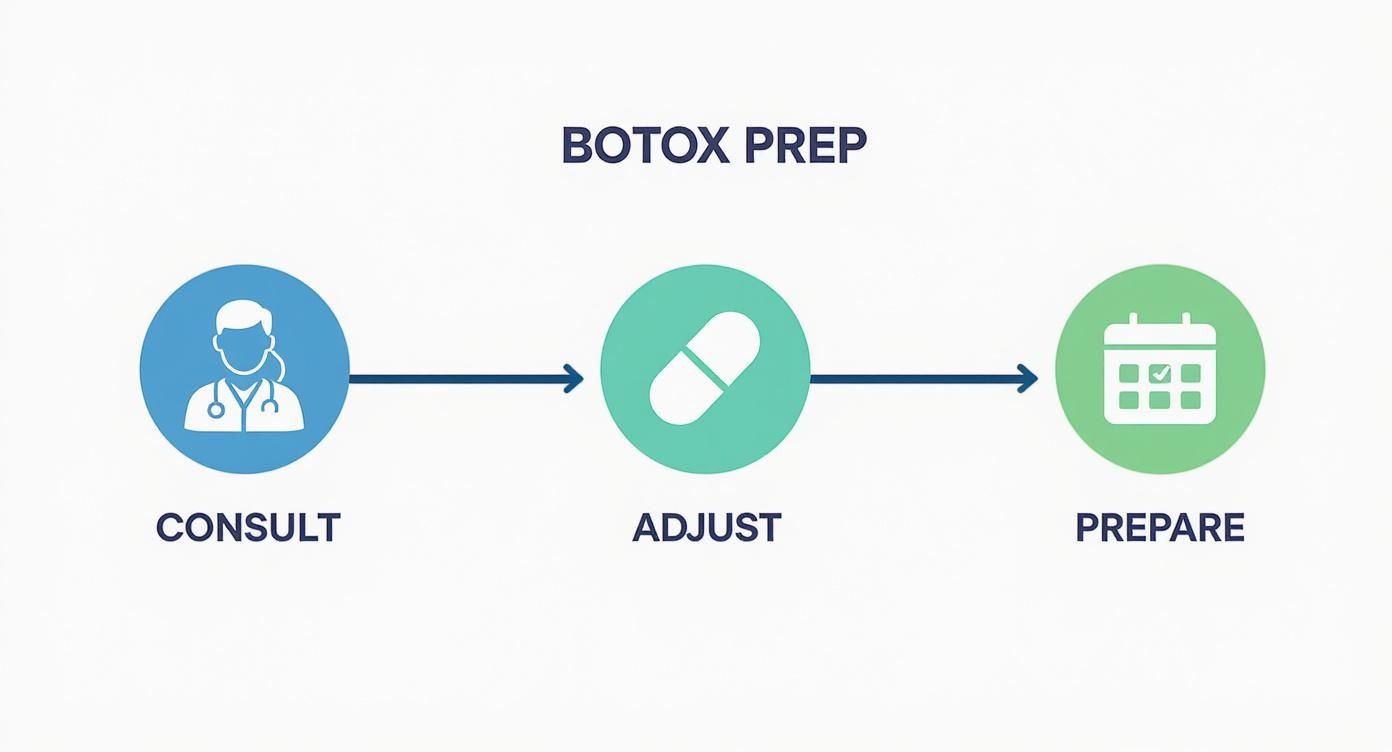
As you can see, proper preparation isn't a last-minute scramble. It’s a thoughtful process that starts weeks before you sit in the treatment chair, with a focus on your consultation, medication review, and a few lifestyle adjustments.
Key Steps for Optimal Results
Don't underestimate the power of these pre-treatment guidelines. Evidence-based research backs this up. A study published in the Journal of the American Academy of Dermatology found that patients who follow pre-injection recommendations, such as avoiding blood thinners, have a significantly lower incidence of bruising (Ablon, G., 2018).
To set yourself up for a fantastic experience, let's focus on a few key areas:
Medication and Supplement Review: This is non-negotiable. Have an open conversation with your St. Louis skin specialist about everything you take. Common items like aspirin, ibuprofen, fish oil, and even green tea can act as blood thinners and increase your risk of bruising.
Lifestyle Adjustments: Small changes can have a huge impact. Hitting pause on alcohol and avoiding harsh skin treatments (like chemical peels or aggressive exfoliants) right before your appointment will leave your skin calm and ready.
Open Communication: Your consultation is the most important part of this process. It’s your chance to discuss your goals, ask questions, and ensure you and your St. Louis dermatologist at Mid-County Dermatology are perfectly aligned on the treatment plan.
By taking these proactive steps, you become an active partner in your treatment, setting the stage for a positive, confidence-boosting experience.
For a deeper look into the treatment itself and what to expect, you can learn more about our specific approach to Botox at Mid-County Dermatology.
Quick Guide to Botox Preparation
This table breaks down the most important pre-treatment steps into a simple timeline, helping you stay organized and prepared for your appointment.
Timeframe | Action Required | Reason |
|---|---|---|
2 Weeks Before | Schedule your consultation. | To discuss goals, medical history, and create a personalized treatment plan with your St. Louis dermatologist. |
1 Week Before | Stop taking blood-thinning medications and supplements (e.g., Aspirin, Ibuprofen, Fish Oil, Vitamin E). | Significantly reduces the risk of bruising at the injection sites. Always consult your doctor first. |
2-3 Days Before | Avoid alcohol. | Alcohol thins the blood, which can increase bleeding and bruising during and after the procedure. |
24 Hours Before | Avoid harsh skin treatments like exfoliants, retinoids, or chemical peels. | Prevents skin irritation and sensitivity, ensuring the treatment area is calm and prepared. |
Day of Appointment | Arrive with a clean, makeup-free face. | Provides a clean surface for the injections, reducing the risk of infection and ensuring precision. |
What to Avoid Two Weeks Before Your Treatment
The two weeks leading up to your Botox injection are your prime opportunity to set the stage for flawless results. At Mid-County Dermatology, we guide our patients from Chesterfield to Frontenac on how a few simple adjustments can make a world of difference, primarily by minimizing the risk of bruising.
The main goal here is to avoid anything that thins your blood. When your blood is thinner, even the tiny needle used for Botox can cause more bleeding under the skin, leading to small bruises. By pausing certain items, you're helping your body's natural clotting process work efficiently.
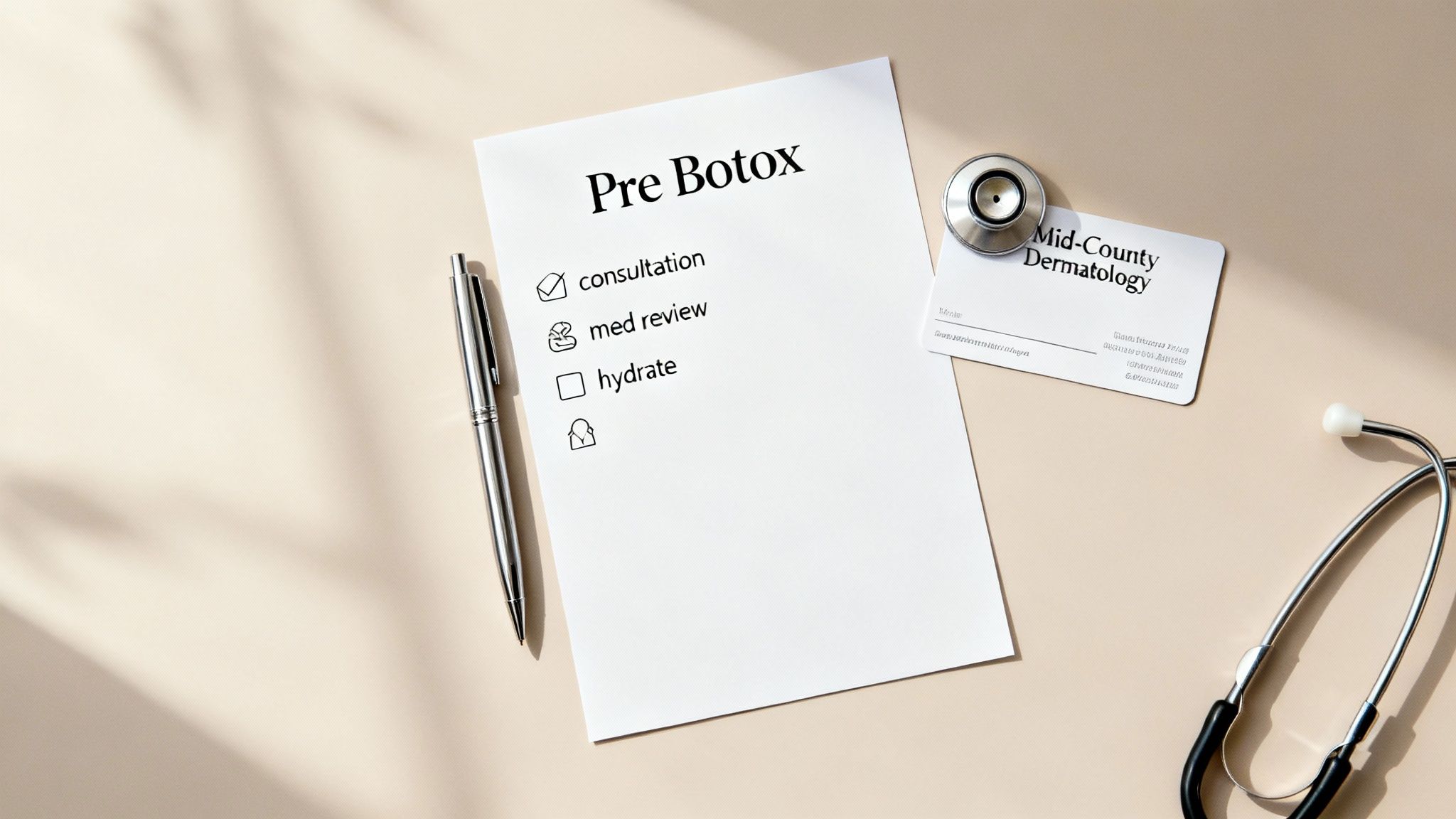
Medications and Supplements to Pause
Your first move should be to review your daily medications and supplements with your St. Louis dermatologist, like Dr. Feigenbaum or Dr. Gibstine at our St. Louis Dermatology practice. Never stop a prescribed medication without consulting your primary doctor. With that said, many common over-the-counter items should be temporarily paused.
Common blood-thinning culprits to avoid for at least one week before your appointment include:
NSAIDs: This category covers common pain relievers like Aspirin, Ibuprofen (Advil, Motrin), and Naproxen (Aleve).
Fish Oil: Those Omega-3 fatty acids are great for your health but are also known blood thinners.
Vitamin E: Another popular supplement that can interfere with blood clotting.
Herbal Supplements: Be cautious with supplements like Ginkgo Biloba, Ginseng, St. John's Wort, and even high doses of garlic.
This is a standard of care for a reason. The American Academy of Dermatology (AAD) guidelines recommend discussing all medications and supplements with your board-certified dermatologist to minimize side effects like bruising.
Skincare Adjustments to Make
Just as you pause certain supplements, it’s also wise to adjust your skincare routine. The goal is simple: your skin should be calm and non-irritated on treatment day.
"Your skin is the canvas for our work. Arriving with a calm, healthy canvas allows for the most precise treatment and predictable results. We want to avoid any inflammation before we even begin."– Dr. Feigenbaum, Mid-County Dermatology
For about three days before your appointment, we recommend you stop using any potentially irritating topical products. This includes active ingredients known for increasing cell turnover or exfoliating the skin. For a complete guide on how to safely use these products, check out our detailed post on managing retinols in your skincare routine.
Key skincare products to pause include:
Retinoids (Retin-A, Tretinoin)
Retinols
Alpha-Hydroxy Acids (AHAs) like glycolic acid
Beta-Hydroxy Acids (BHAs) like salicylic acid
By following these simple guidelines, you’re taking an active role in your treatment outcome. This careful preparation is one of the best things you can do to ensure a smooth procedure.
Final Preparations 48 Hours Before Your Appointment
Your appointment is just around the corner, which means it’s time for the final steps to get your skin in prime condition. The last 48 hours are all about creating a calm, hydrated canvas for our team at Mid-County Dermatology. Knowing exactly how to prepare for Botox injections can make a real difference in your comfort and results.
This final stretch is about active care. By focusing on hydration and gentle skincare, you’re setting the stage for a smoother procedure and recovery—a goal we share with all our patients, from Ladue to Clayton.
Skip the Alcohol
One of the most important things you can do in the two days before treatment is to avoid alcoholic beverages. Alcohol is a vasodilator, meaning it temporarily widens your blood vessels. This increases blood flow and can make you more susceptible to bruising where the injections are placed.
Beyond that, alcohol is dehydrating. For the best outcome, stick with water and other hydrating fluids to keep your skin plump and resilient.
Prioritize Gentle Skincare
Now is not the time to experiment with a new acid peel or try an aggressive at-home treatment. Your goal is to keep your skin as calm and non-irritated as possible. We always advise our St. Louis patients to pause any potentially sensitizing skincare for at least two to three days before their appointment.
"Think of the 48-hour window as a 'rest period' for your skin. Keeping it calm and hydrated minimizes variables and allows us to perform the treatment with the utmost precision for our patients."– Dr. Feigenbaum, Board-Certified St. Louis Dermatologist
A simple, gentle routine is all you need. Focus on these key actions:
Gentle Cleansing: Stick with a mild, non-stripping cleanser you know and trust. Avoid harsh scrubs or exfoliating brushes.
Hydrating Serums: This is a great time for products with ingredients like hyaluronic acid to give your skin a moisture boost.
Simple Moisturizer: Lock everything in with a basic, non-comedogenic moisturizer. Steer clear of any creams containing active ingredients like retinoids or acids during this period.
Sun Protection: Protecting your skin with a broad-spectrum SPF is especially important in the days leading up to any dermatological procedure.
Get Plenty of Rest and Hydration
Finally, don't underestimate the power of a good night's sleep and plenty of water. When you're well-rested, your body's natural recovery processes function at their best. Great hydration supports overall skin health and contributes to a better experience from start to finish.
By following these simple steps, you'll walk into our St. Louis clinic feeling confident, relaxed, and perfectly prepped for your treatment.
Navigating the Day of Your Botox Injection
The day has finally arrived! Knowing what to expect on the morning of your procedure can help ease any last-minute jitters and make the process feel smooth and comfortable.
Our goal at Mid-County Dermatology, whether you're visiting our office near Clayton or Ladue, is to make your experience relaxed and straightforward. A few simple things on your end can help us deliver the best possible care.
Your Morning Checklist
Think of this as the final, easy step in your Botox prep.
Have a Light Meal: We suggest eating a light meal or snack before you arrive. This keeps your blood sugar stable, preventing any lightheadedness.
Arrive with a Clean Face: Please come to your appointment with a fresh, clean face, free of makeup or heavy creams. This ensures a sterile surface for the injections and minimizes any risk of infection.
Complete Any Paperwork: To save time, you can fill out necessary forms beforehand through our secure Mid-County Dermatology patient portal.
Getting these small things done ahead of time helps our team focus entirely on you and your aesthetic goals.
What to Expect at Our St. Louis Clinic
From the moment you check in, our team is focused on your comfort. We understand that even a minimally invasive procedure can feel daunting, so our process is designed to be clear and reassuring.
Once you’re in the treatment room, your St. Louis skin doctor will start by cleansing the areas to be treated. Next, they will ask you to make a few facial expressions, like frowning or raising your eyebrows. This critical step lets them see your unique muscle movements and precisely mark the best spots for the injections.
Primary study: Carruthers et al., JAAD (2002). This placebo-controlled trial supports Botox for glabellar frown lines. It does not establish a universal dose, preventive benefit in young adults, or superiority of one injector profession.
"The marking process is where artistry meets anatomy. It’s how we ensure the Botox is placed exactly where it will be most effective for achieving a natural, refreshed look for our patients in St. Louis."– Dr. Gibstine, Board-Certified St. Louis Dermatologist
The injections themselves are very quick. Using an ultra-fine needle, your dermatologist will administer the Botox into the targeted muscles. Most of our patients describe the feeling as a tiny pinch that’s over in a moment. The entire injection part of the appointment often takes less than 10 minutes.
Afterward, we’ll go over simple aftercare instructions. There's no downtime required, so you can head right back to your daily activities feeling confident and well-cared-for.
Your Post-Treatment Plan for Lasting Results
Congratulations, you’ve done it! The steps you take after your Botox appointment are just as crucial as the ones you took to prepare. Following a simple aftercare plan is the best way to protect your investment and ensure your results settle in beautifully.
At Mid-County Dermatology, we give every patient clear aftercare instructions. The main goal is to prevent the neurotoxin from migrating to unintended muscles in the hours right after your appointment.
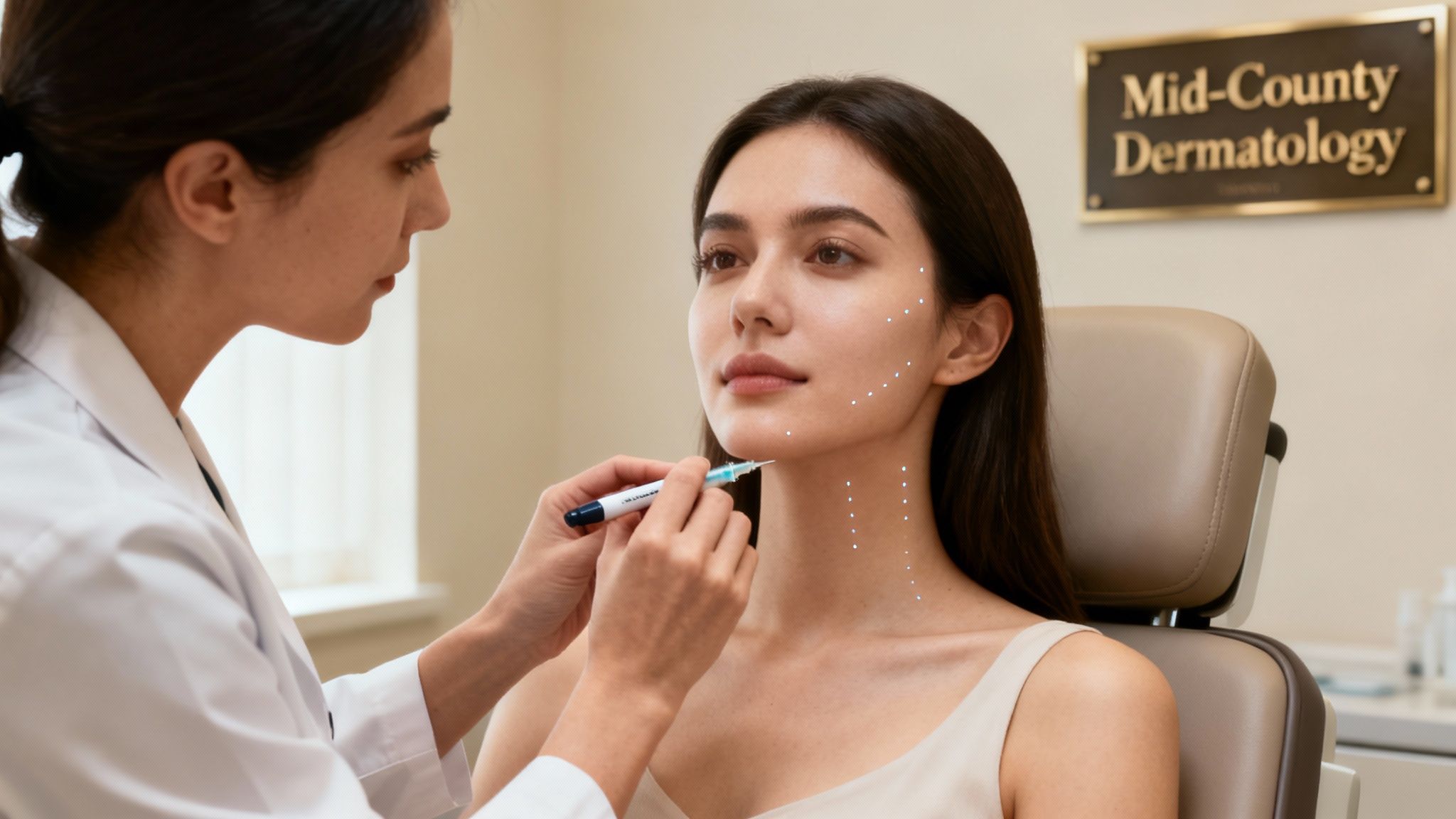
The First Four Hours: The Critical Window
The first few hours post-treatment are the most important for ensuring a perfect outcome.
The number one rule? Remain upright for at least four hours. No lying down or bending over for long periods.
This simple action helps keep the Botox localized where it belongs. It's also a good idea to avoid touching, rubbing, or putting pressure on the treated areas. That means skipping facial massages and being extra gentle when you wash your face.
The Next 24-48 Hours: Settling In
Once you're past the initial four-hour window, the rules relax a bit. For the first 24 hours, it's essential to avoid strenuous physical activity. Increased circulation can potentially diffuse the Botox and increases the risk of bruising.
A few things to keep in mind:
Avoid Intense Workouts: Hold off on heavy weightlifting or intense cardio. A gentle walk is perfectly fine.
Skip the Sauna and Hot Tub: Avoid high heat for a day or two, as it can increase blood flow.
Postpone Other Facial Treatments: Wait at least 24 hours before getting other treatments like facials or microdermabrasion.
Stay Out of the Sun: Sun exposure can worsen any swelling or bruising. Protect your skin with a high-quality sunscreen. For more on this, check out these sunscreen tips from our St. Louis Dermatology professionals.
"Patience is key after your treatment. The best results unfold over time, and following these simple aftercare steps ensures that what you see in the mirror in two weeks is exactly what you hoped for."– Dr. Gibstine, Board-Certified St. Louis Dermatologist
Post-Botox Care At-a-Glance
Guideline | What to Do | Why It's Important |
|---|---|---|
Positioning | Stay upright for 4 hours. | Prevents Botox from migrating to other muscles. |
Physical Activity | Avoid strenuous exercise for 24 hours. | Minimizes bruising and stops the product from diffusing. |
Touching the Area | Don't rub or massage the injection sites. | Ensures the Botox stays exactly where it was placed. |
Heat Exposure | Skip saunas and hot tubs for 24-48 hours. | Reduces increased blood flow that can cause bruising. |
Other Treatments | Postpone facials or peels for at least 24 hours. | Allows the skin and product to settle without interference. |
By sticking to this straightforward plan, you’re creating the perfect environment for your treatment to work its magic. For our patients across the St. Louis area—from Creve Coeur to Chesterfield—these aftercare steps are the final piece of the puzzle for achieving refreshed, natural-looking results.
Frequently Asked Questions About Botox Prep
Can I wear makeup to my appointment?
It’s always best to arrive with a clean, makeup-free face. We will thoroughly cleanse the treatment area before injections, but coming with a fresh face allows your St. Louis dermatologist to accurately assess your facial muscles right away. If you must wear makeup, we can provide gentle cleansing wipes for you to use upon arrival.
What if I accidentally took Ibuprofen or another medication on the "avoid" list?
Don't panic. The primary reason to avoid these is to minimize bruising. Taking a single dose by mistake doesn't mean you can't have the treatment. The most important thing is to inform your dermatologist at Mid-County Dermatology. We can then proceed with extra care, though your risk of minor bruising might be slightly higher.
How should I prepare if I have very sensitive skin?
If your skin is prone to sensitivity, we recommend simplifying your skincare routine for about three days before your appointment. Pause any harsh active ingredients like retinoids or exfoliating acids and focus on a gentle cleanser and a soothing, hydrating moisturizer. This helps strengthen your skin's barrier and ensures it's calm on treatment day. Discussing oral arnica supplements with Dr. Feigenbaum or Dr. Gibstine may also be an option to help with potential bruising.
Does my skincare routine really affect my Botox results?
Yes, absolutely. While Botox works on the muscle, the condition of your skin's surface plays a role in your overall experience and recovery. Arriving with calm, hydrated, and non-irritated skin helps minimize redness and can lead to a quicker, easier recovery. A healthy skin surface allows your St. Louis skin specialist to perform more precise injections.
When should I see a dermatologist about Botox?
You should schedule a consultation with a board-certified dermatologist whenever you are considering Botox for the first time or have new aesthetic goals. A professional consultation is essential to determine if you are a good candidate, discuss realistic outcomes, review your medical history, and create a personalized treatment plan that is safe and effective for you.
Ready to take the next step toward refreshed, natural-looking results? The expert team at Mid-County Dermatology is here to guide you through every stage of your Botox journey. Schedule your personalized consultation with a board-certified St. Louis dermatologist today. To schedule by phone, call 314-994-0200.
This information is for educational purposes only and does not constitute medical advice. Please consult with Dr. Feigenbaum, Dr. Gibstine, or another qualified healthcare provider at Mid-County Dermatology for personalized treatment recommendations. Individual results may vary.


Comments